Something spills. You stare at it for a second, then the panic kicks in. Most people immediately start rubbing. That instinct is the main reason we keep getting called out to stains that could have been handled at home.
We’ve been cleaning Auckland carpets since 2010. The jobs that come to us in the worst shape are almost never the result of a bad stain. They’re the result of a good stain handled badly. Hot water on wool. Scrubbing with a brush. Three different products are layered on top of each other without rinsing in between. The original spill was probably fine. The cleanup is what did the damage.
So this is a guide about what actually works, written from that perspective. It covers specific stains, set-in stains that have already dried, the mistakes that make things permanent, and an honest answer to the question most cleaning guides won’t touch: some stains don’t come out, and it’s better to know that early. There’s also a section on when to call a professional rather than keep trying, because more DIY at that point usually makes our job harder.
The things that apply to every stain, before you reach for anything
None of this is complicated. But getting it wrong undoes everything else.
Blot, don’t rub. Pressing straight down lifts the stain. Rubbing drives it deeper into the pile and breaks the fibre. The carpet ends up looking marked even after the stain is technically gone. This is the single most common mistake we see, and it’s understandable because rubbing feels like it’s doing more.
Start at the edge, not the middle. Work inward with each blot. Starting in the middle just pushes the stain outward into a larger area.
Speed matters more than product choice. Most fresh stains can be fully removed within the first 30 minutes. The same stain two hours later might only be improvable. The same stain two days later might be permanent. What you grab from under the sink matters far less than how quickly you grab it.
Test anything new in a hidden spot first. Behind a door, under the couch. A small dab, two minutes, check the colour. Takes 90 seconds and has saved a lot of expensive carpet from a well-intentioned disaster.
Less liquid than you think. Soaking the carpet drives moisture through to the backing and into the underlay. In Auckland’s winters, when homes are closed up and there’s limited airflow, a wet carpet backing can start growing mould within 24 hours. Use a small amount, blot it up, repeat rather than drenching.
One thing almost nobody knows: if the stain looks serious, take a photo before you do anything. New Zealand contents insurance can cover accidental carpet damage, but your insurer needs to see the original stain before any treatment. Worth knowing before you start.
Wool carpet and synthetic carpet are not cleaned the same way
Most New Zealand homes have wool or wool-blend carpet. That’s worth knowing before you apply anything, because wool is more vulnerable than people expect.
Hot water shrinks wool fibres, and the damage is permanent. This catches a lot of people out because hot water feels like it should clean better. It doesn’t on wool, and on protein stains like blood or egg, it actively makes things worse by cooking the proteins into the fibre.
Bleach and ammonia will damage the fibre structure and strip colour from wool carpet. Avoid both entirely.
Vinegar is fine on wool when it’s diluted. One part white vinegar to two parts cold water. Straight from the bottle is too acidic. Most supermarket carpet cleaners are formulated for synthetic carpet and are also too harsh for wool, so check the label or look for something specifically pH-neutral or wool-safe.
Synthetic carpet, nylon, polyester, and polypropylene are more forgiving across the board. Warmer water is fine. Stronger cleaning agents are generally okay. Bleach can still strip colour from dyed synthetic carpet, though, so a patch test is worth doing regardless of carpet type.
If you’re genuinely not sure what your carpet is, look for offcuts from the installation, or take a photo to a flooring retailer. They can usually tell you from a picture.
The stains that come up most in Auckland homes
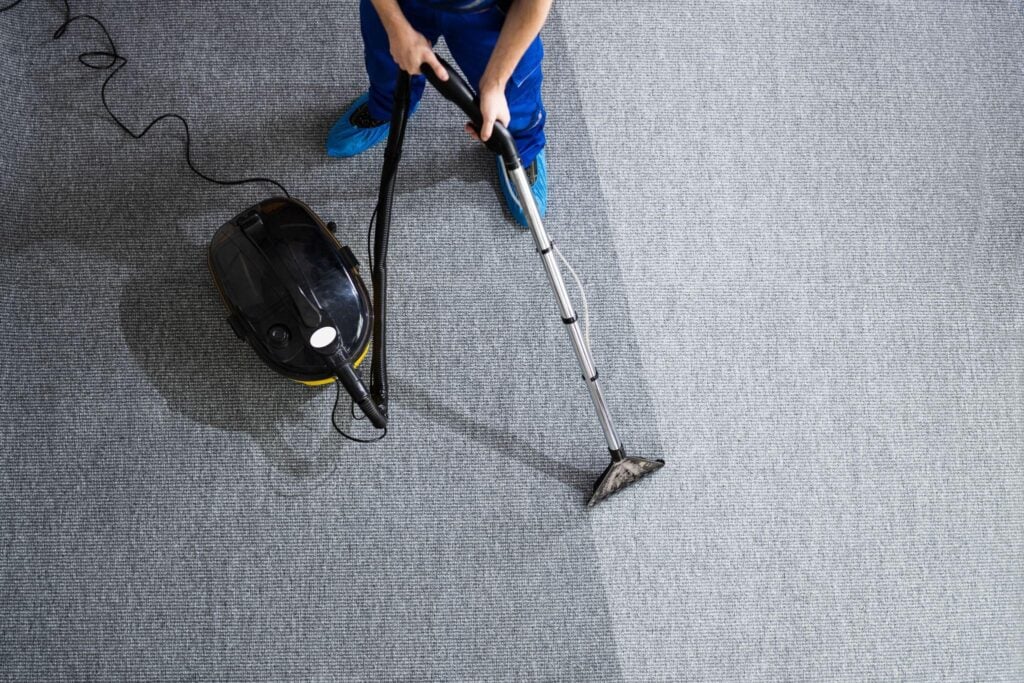
These are the ones our carpet cleaning team gets called for most often. The steps below are for fresh spills. If the stain has already set, there’s a separate section further down.
Red wine
Every dinner party in Auckland eventually contributes to someone’s carpet. Fresh red wine actually comes out pretty well if you move immediately. The problem is that the tannins start bonding to the fibres within minutes.
Blot up as much as you can first, pressing firmly. Keep replacing the paper towel as it saturates rather than spreading the wine back into the carpet with a soaked cloth. Once you’ve lifted what you can, add a small amount of cold water to dilute the remainder, then blot again.
For the cleaning solution: one tablespoon of dish soap and one tablespoon of white vinegar in two cups of cold water. Apply with a clean cloth, blot from the outside in. Rinse out the soap with a little plain cold water afterwards, because soap left in the carpet attracts dirt. Blot dry and put a weighted dry towel over the spot for half an hour.
On wool carpet: skip the dish soap. White vinegar diluted 1:2 with cold water, applied and blotted. Rinse well.
Coffee and tea
Looks similar to wine, but different chemistry. The main trap here is that people are usually in the kitchen when this happens, and hot water is right there. Don’t use it. Hot water sets tannin stains rather than lifting them, which is the opposite of what you want.
Cold water to dilute and blot first. Then, a teaspoon of dish soap in a cup of cold water was worked in gently with a cloth. Rinse thoroughly. Any soap residue left in the carpet fibres will attract dirt, and you’ll have a grey patch within a week.
Mud and dirt
Auckland winters are hard on carpets. The counterintuitive advice here is to wait. Wet mud smears and spreads if you try to clean it while it’s still wet. Let it dry solid first, even if that takes a few hours, then vacuum it up from several directions.
Treat whatever pigment remains with dish soap and warm water, blot from outside in, rinse, dry. For red clay soil specifically, which is common across a lot of Auckland suburbs, this sometimes isn’t enough on its own. A small amount of diluted hydrogen peroxide on synthetic carpet can help with the residue. Patch test before applying.
Pet urine
This is the one that most often ends up as a professional job after a DIY attempt hasn’t worked. The reason the smell comes back after cleaning is that urine soaks through the carpet and into the underlay. You can clean the surface perfectly and still have a smell problem, because the source is underneath.
For a fresh accident, blot up as much liquid as possible first. For a large area, stand on thick paper towels to get more pressure. Keep swapping them until there are no more liquid transfers.
The type of cleaner you use matters a lot here. Standard products mask the smell but don’t break down the uric acid crystals that cause it. Enzyme cleaners do. They’re available at pet shops and most supermarkets. Apply enough to reach the underlay, leave it for 15 minutes, and blot thoroughly. Then dry the area properly, with fans and open windows, because damp carpet in Auckland’s winter is a mould risk.
If the smell comes back after the carpet dries, the underlay is saturated. That’s beyond what home treatment can fix. Professional hot water extraction is the starting point, and sometimes underlay replacement is the only thing that actually works.
Grease and cooking oil
Grease is different from liquid stains. You need to absorb it before you can clean it, not the other way around.
Cover the stained area generously with baking soda. Leave it for 15 minutes. It pulls the oil upward. Vacuum it up slowly. Then, a small amount of dish soap on a damp cloth, worked in gently, handles most of what’s left. Rinse well. Soap residue in carpet is its own problem, so don’t skip the rinse.
Blood
Cold water only. This matters a lot, and a lot of people get it wrong. Heat coagulates blood proteins and bonds them to the fibre permanently. On blood, on egg, on anything protein-based, cold water is the rule.
Fresh blood comes out with repeated cold water blotting. For setting blood on synthetic carpet, a 3% hydrogen peroxide solution from a chemist is effective. Apply for two minutes, blot. Patch test first because it can lighten some carpet colours. On wool, cold water only, and call a professional if it doesn’t lift.
Ink
Ink bonds quickly, so rubbing it immediately spreads the stain significantly. Rubbing alcohol on a clean cloth, dab at the stain rather than pouring it directly. Work from outside in, a fresh section of cloth each time. Rinse with cold water once it’s lifted.
Old ink stains often don’t fully lift at home, regardless of what you try. A professional has access to stronger solvents.
When the stain has already dried
Old stains are harder because the substance has had time to oxidise and bond chemically with the fibres. Tannin stains, red wine, coffee, and tea are particularly difficult after 24 to 48 hours because the tannins cross-link with the fibre over time. There’s also the issue of previous treatment. A lot of the set-in stains we see are difficult, not because of the original spill, but because something was applied at the time that made things worse. If you’ve already tried something, tell any professional cleaner what you used before they start.
For set-in stains at home, baking soda and vinegar are the most reliable DIY approach for food and drink stains and pet odour. Sprinkle baking soda over the area. Spray a 50/50 mix of white vinegar and cold water on top. It fizzes. Leave it for 15 to 20 minutes, then blot with a clean cloth working inward. Rinse with plain cold water and blot dry. Vacuum once it’s completely dry.
This works better on some stains than others. It often significantly improves old stains rather than fully removing them, especially if they’ve been sitting for several days. If you’ve tried it twice and the stain has improved but not fully lifted, stop adding products. More treatment at that point is usually counterproductive.
The mistakes that make stains permanent
These come up repeatedly when clients tell us what happened before they called.
- Hot water on wool or protein stains. Wool fibres shrink. Blood and egg proteins cook into the fibre. Neither can be undone. Cold water on both, always.
- Rubbing. It spreads the stain, pushes it deeper, and damages the fibre texture. The carpet ends up looking marked even after the colour has been lifted.
- Too much liquid. Excess moisture reaches the backing and underlay. In Auckland winters, with homes closed up, a carpet that stays wet can develop mould in the backing within 24 hours. Use less than you think you need, blot thoroughly between applications.
- Hydrogen peroxide without testing first. It’s a mild bleach. On a darker carpet, it will lighten or permanently remove the dye. Always test a hidden area.
- Leaving it too long. Thirty minutes is roughly the window where most stains are fully recoverable. After 24 hours, the same stain is often only improvable. Red wine, coffee, and pet urine are particularly unforgiving.
Some stains don’t come out
Most guides avoid saying this directly. We’re not going to, because there’s no point spending an afternoon on something that isn’t going to shift.
Some stains permanently alter the carpet fibre rather than just sitting on top of it. No amount of cleaning, professional or otherwise, restores colour that has been chemically changed.
- Hair dye, fabric dye, food colouring. Designed to permanently colour fibres. Works just as well on carpet as on fabric.
- Bleach. Colour is gone. Nothing brings it back.
- Turmeric. Curcumin is one of the most tenacious natural dyes around. Even professional treatment rarely removes it fully, and we’ve tried.
- Old pet urine with a saturated underlay. The carpet surface can be cleaned perfectly. The odour source underneath remains.
- Some plant fertilisers and strong cleaning products. These chemically alter the fibre rather than staining the surface.
If you’re looking at one of these, the realistic options are a professional assessment to confirm what’s actually possible, carpet patching if the area is small and you have matching offcuts, or an insurance claim under your contents policy if you have one. Take a photo of the stain before touching it. Your insurer will ask for it.
When to stop trying yourself
There’s no shame in calling a professional. The honest reason to do it isn’t that you’re giving up, it’s that continued DIY treatment past a certain point makes the carpet harder to restore, not easier.
Call if the stain hasn’t responded after 24 to 48 hours of trying. Call if you’ve applied several products and the stain has spread or the colour around it has changed. Call if it’s a pet urine stain with a persistent smell, because the underlay is almost certainly involved, and that needs hot water extraction at minimum. Call if it’s on wool or a delicate or light-coloured carpet and you’re not confident.
Life Maid Easy does carpet cleaning across Auckland. We’ve been doing it since 2010. If you’re not sure whether a stain is salvageable, an assessment costs nothing and is better than finding out after two more rounds of DIY that the window has closed.
A few things that help prevent this situation in the first place
A proper doormat at every entrance. Not a decorative one. Something thick enough to actually scrub the mud and moisture off shoes before they reach the carpet. This makes a noticeable difference in Auckland winters when the ground is consistently wet and red clay soil is everywhere.
Keeping diluted white vinegar and white paper towels somewhere accessible. Not in the back of a cupboard. Somewhere, you can grab them within ten seconds of something spilling. Most stains are won or lost in the first few minutes.
Get the carpet professionally cleaned every 12 to 18 months. This is the manufacturer’s recommendation for most carpet types, and it’s referenced in NZ Standard 3733:1995. Regular professional cleaning removes the ground-in dirt that vacuuming doesn’t reach and extends carpet life. Our ongoing cleaning service can be combined with carpet cleaning, and we also cover commercial carpet cleaning for offices.
Have a stain that’s not shifting?
Get in touch via our contact page or call us on 09 909 6560. We cover the full Auckland region. If you’re not sure whether the stain is recoverable, we’d rather you ask before attempting further treatment at home.